NeMO Clinical Center Milan was inaugurated in 2008 and is the first location of the NeMO network, it is the reference point for research and care of children and adults.
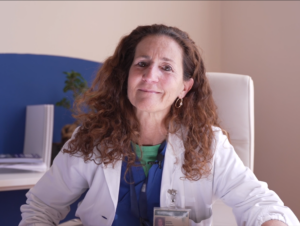
The Clinical and Scientific Direction is entrusted to Prof. Valeria Sansone, Full Professor of Neurology at the University of Milan, who employs a clinical and research team of 65 professionals.
Since 2017, the “Nanni Anselmi” Clinical Research Center has been active in the structure, dedicated to clinical research on neuromuscular diseases.
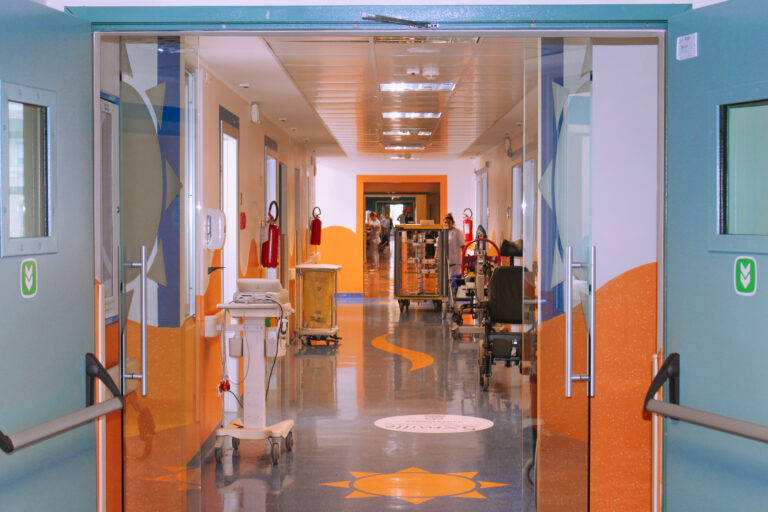
In the NeMO Clinical Center Milan there are Neurology, Neurology of the Developmental Age, Pneumology, Physiatry, Neurology for taking charge, Psychology and Neuropsychology ambulatories. In the Center we take care of patients with:
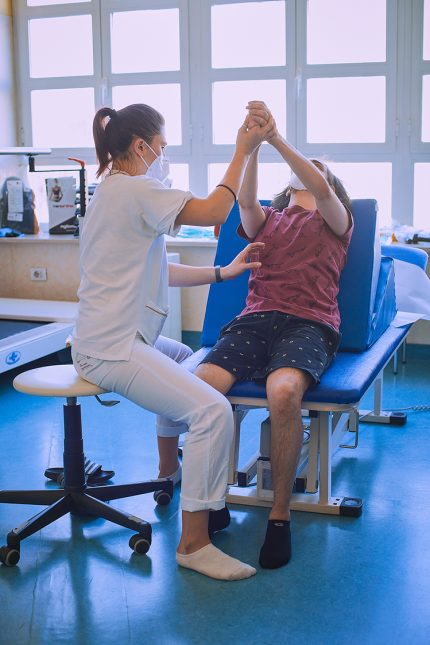
At NeMO Clinical Center Milan we offer different health services for our patients:
Vuoi richiedere una visita, un ricovero o semplicemente avere informazioni sui nostri servizi? Compila il form qui.
Il Servizio di Accettazione del Centro NeMO di riferimento ti risponderà per orientarti nel percorso più adatto alle tue esigenze e indicarti i passi successivi.
I Centri Clinici NeMO operano in ambito sanitario-riabilitativo, in regime di ricovero ordinario, day hospital e ambulatoriale, e le prestazioni sono erogate in accreditamento con i Servizi Sanitari Regionali.
Le nostre liste d’attesa sono gestite secondo il Piano Nazionale di Governo delle Liste d’Attesa (PNGLA) 2026-2028 e il Decreto 26 giugno 2026, che prevede tra l’altro l’indicazione obbligatoria della classe di priorità sulla prescrizione del medico.
Per le visite e gli esami ambulatoriali, la classe di priorità indicata in ricetta stabilisce il tempo massimo di attesa, calcolato dal momento della richiesta: U (urgente) entro 72 ore; B (breve) entro 10 giorni; D (differibile) entro 30 giorni per le visite ed entro 60 per gli esami strumentali; P (programmabile) entro 120 giorni. Le prescrizioni senza classe di priorità sono considerate programmabili.
Per i ricoveri le classi sono quattro: A entro 30 giorni, B entro 60 giorni, C entro 180 giorni, D senza attesa massima definita ma comunque entro 12 mesi.
Ogni richiesta viene valutata dal Servizio di Accettazione e, se idonea, inserita in lista d’attesa.
L’ordine di ingresso dipende prima di tutto dall’urgenza sanitaria e solo in seconda battuta dalla data della domanda.
Nel definirlo teniamo conto della complessità sanitaria, della fragilità della rete sociale, della continuità assistenziale, dell’ordine cronologico di presentazione e della residenza.
Hanno priorità le persone che si trovano in prossimità dell’evento indice, sono totalmente dipendenti nelle attività quotidiane, presentano condizioni non gestibili a domicilio o hanno subito un ricovero per evento acuto che ne ha ridotto ulteriormente l’autonomia.
Tutti i Centri NeMO sono attivi nell’ambito della ricerca clinica, conducendo numerosi studi, la maggior parte dei quali in rete con gli altri Centri NeMO e/o con la comunità clinica nazionale ed internazionale: per rendere maggiormente efficiente questa attività di rete, presso i Centri Clinici di Milano e Roma , sono presenti unità cliniche dedicate alla ricerca, che supportano la gestione ed il coordinamento dei trial clinici nei quali i due centri sono coinvolti.
Accanto alla ricerca clinica è attivo NEMOLAB, hub tecnologico dedicato a progetti che mirano a trovare soluzioni per migliorare l’autonomia di bambini e adulti con malattia neuromuscolare.
Active since 2017, it represents a national and international reference point for research in the field of neuromuscular diseases. The activity carried out within this area favors the implementation of protocols and procedures for the conduct of multicenter clinical trials, in adults and children, in synergy with the other locations of the NeMO Center.
The NeMO Clinical Center Milan is the Presidium of Rare Diseases of the Lombardia Region and is the ERN Center (European Reference Network) for neuromuscular diseases.
It is part of the most important national and international research networks in Myotonic Dystrophies, Facioscapulohumeral Dystrophy, SMA and DMD and is the coordinating center of the National ALS Registry.
It is the only European center of the Neuromuscular Study Group, a neuromuscular study group mainly focused on collaborative networks and clinical trials, coordinated by the University of Kansas and the University of London, Queen Square. For 3 years it was also part of the Executive Board.
It is recognized by AIM (Italian Myology Association) and it is a reference for associations of patients with neuromuscular disease and NeMO members. It works in close collaboration with the regional territorial network.
The NeMO Clinical Center Milan is also a Neurorehabilitation Unit of the University of Milan, Department of Biomedical Sciences for Health, and has an agreement for teaching activities with:
Compila il form, siamo a tua disposizione per rispondere alle tue domande.
Valeria Sansone is a neurologist. She is a full professor at the University of Milan, and since 2013, she has been the clinical-scientific director of NeMO Clinical Center Milan and "Nanni Anselmi" Clinical Research Center.
Since 1991, she has been dedicated to clinical research on neuromuscular diseases, particularly myotonic dystrophies and skeletal channelopathies. Her primary areas of clinical research focus on developing clinical-diagnostic protocols for muscular channelopathies and the development of clinical-diagnostic protocols for neuromuscular, cardiac, endocrine, and central nervous system aspects of myotonic dystrophies.
Her research activities have taken her abroad, first to Germany (Gottingen and Munich, Max Planck Institute, studying cellular physiology techniques) and then to the United States in 1997, at the Neuromuscular Unit of the Department of Neurology at the University of Rochester, NY, at the General Clinical Research Center of Strong Memorial Hospital. In the same year, she was the recipient of one of the three awards for the best scientific contribution at the American Association of Neurology in Miami, focusing on a rare form of skeletal channelopathy associated with skeletal-facial dysmorphism and cardiac arrhythmias, known as Andersen-Tawil syndrome, of which she studied one of the most extensive cases.
Today, she is nationally and internationally recognized as one of the leading experts in neuromuscular diseases, with a particular focus on myotonic dystrophies, facioscapulohumeral muscular dystrophy, spinal muscular atrophy, and dystrophinopathies such as Duchenne and Becker muscular dystrophy.